



Women Aged 15-45 Years Old Living in the United States with Endometriosis: Addressing Diagnosis, Pain Management, and Quality of Life
Abstract
Endometriosis affects a diverse group of women around the world [1-9]. American women have more options, access to treatment, and medications in comparison to women in low-income countries. However, in the US, factors such as age, race, income, and geography may lead to healthcare disparities. By evaluating the quality of life for diverse groups of women with endometriosis in the United States, we can identify possible solutions for women around the world. Throughout this review, we will evaluate misdiagnosis, steps to an accurate diagnosis, treatment options for pain, infertility outcomes, and mental health effects to determine what is needed to improve the quality of life for all women with endometriosis– regardless of socioeconomic status, endometriosis stages, and age. Potential treatment options and ongoing research projects will be addressed in response to diverse perspectives from patients, researchers, and healthcare professionals. More research is needed regarding noninvasive, effective cures for endometriosis as well as evaluating the most effective treatment method for symptoms. Additional research and educational outreach will help all women with endometriosis.
Key Concepts: Endometriosis diagnosis, chronic pelvic pain, mental health effects, pain management
Introduction
Endometriosis is an estrogen-dependent disease that occurs when the tissue of the uterus grows outside the uterus [10]. It often directly affects the fallopian tubes, ovaries, and the pelvis [10]. The most common symptoms are pelvic pain, dysmenorrhea, and dyspareunia [1-7, 10-12]. Dysmenorrhea refers to pain associated with a period such as cramps, body aches, and stomach pain [12]. Dyspareunia refers to pain involving intercourse [12]. These symptoms are relatively common, which means they delay diagnosis due to the time it takes to eliminate other possible diagnoses, as well as the lack of straightforward tests [2, 7]. These symptoms can correspond to various health issues, which makes obtaining a timely and accurate diagnosis difficult, and only prolongs the painful symptoms [2, 3, 7]. Currently, laparoscopic surgery, which is a minimally invasive procedure that relies on a camera moving through tiny incisions, is the only approved way to diagnose endometriosis [2, 3, 7-9]. Looking at the current literature about how to effectively identify and treat endometriosis in American women can help resolve these issues. The literature provides promising alternatives to laparoscopic surgery, as well as treatment methods for all women without needing an official endometriosis diagnosis. This will dramatically improve the quality of life, mental health, and physical health of American women who suffer from endometriosis.

Discussion
Obtaining an Endometriosis Diagnosis in the United States
Misdiagnosing Endometriosis in Reproductive-Aged Women
American Women have a challenging time receiving an accurate diagnosis for endometriosis due to its overlapping symptoms with other diseases [2,7]. On average, there is a seven-to-nine-year diagnostic delay globally [7]. Lower back pain is a symptom of endometriosis that is often mistaken as a musculoskeletal disorder [2]. Recent case studies show that some women are directed to a physical therapist before a gynecologist [2, 7]. In some cases, patients are seen by numerous pediatricians, hematologist-oncologists, gastroenterologists, primary care physicians, and obstetrician-gynecologists in hopes of obtaining a diagnosis to begin treatment [7]. One study showed that laparoscopy surgery, which is the most common path toward an endometriosis diagnosis, can lead to false negatives [2]. One false negative seemingly rules out the diagnosis permanently since doctors believe it is an accurate result and begin looking at other possible areas [2]. While ruling out diseases through testing, patients may be misdiagnosed with irritable bowel syndrome due to the overlap in symptoms [7].
The Oswestry Disability Index is a questionnaire filled out by patients and subsequently used to predict diagnosis [2, 7]. Essentially, the questionnaire determines how debilitating the pain is, and how much it alters your everyday life. Unless pain is life-damaging, patients are often turned away by doctors who claim their symptoms are normal [7]. Without a prompt diagnosis, symptoms worsen, and pain intensity increases dramatically [2, 7].
Living with uncertainty causes extreme financial burdens [2, 7]. Pads, tampons, and other feminine care products need to be purchased frequently to account for heavy bleeding. Additionally, regular use of pain medications such as Advil and Tylenol can be costly. Frequently scheduled office visits, surgical treatments, and imaging lead to expensive medical bills. Even with a diagnosis, endometriosis causes additional medical treatment for post-surgical observations to manage pain and prevent complications.
Journey to an Accurate Diagnosis
Past research shows laparoscopic surgery along with a biopsy is the only way to accurately diagnose endometriosis and evaluate its stage [2, 7]. The revised American Society for Reproductive Medicine, the Enzian system, and the American Academy of Gynecologic Laparoscopists are different classification systems used to diagnose endometriosis and its severity [7]. An ultrasound, protein biomarkers, or magnetic resonance imaging (MRI) are insufficient for an official diagnosis [2, 3]. Researchers agree laparoscopic surgery is minimally invasive but rarely worth the risks for early disease detection when other diseases could be ruled out first [4, 7, 9]. Although most professionals support surgery, some believe it is not worth depleting the number/quality of eggs in the process, further leading to infertility [4]. If performed, the surgery is relatively successful for those with endometriosis [2, 7]. Moawad et al. show that only 7.7% of patients needed reoperation. In one case study, an individual reported five months after the removal of endometrial implants and scar tissue, that her pelvic pain was completely eliminated [2]. To receive the correct diagnosis, physiotherapists, medical workers, and the general public must be informed regarding endometriosis symptoms.
Promising research addresses a new alternative to laparoscopic surgery– serum microRNAs [3]. Currently, the majority of researchers rely on laparoscopic surgery as the only diagnosis method; however, this inaccessibility prolongs the painful side effects for many women. Serum microRNAs are a noninvasive method for early detection [3]. After looking at a variety of demographics and characteristics including age, body mass, race, and endometriosis stages, researchers found extracted microRNAs could be used to diagnose endometriosis with a 90% accuracy rate [3]. In the past, research excluded participants with stage 1 or stage 2 endometriosis, which are mild to moderate number of adhesions, as well as individuals taking hormonal treatment– this severely limited the population demographics and was not supported by the scientific community [3]. Using this new method, diagnosis time, hospitalization time, risk of disease progression, invasive procedures, and financial expenses will decrease. Once approved, the use of microRNAs will likely improve the accessibility of receiving an endometriosis diagnosis for women throughout the world.
Pain Management and Treatment Options for Women Aged 15-45 Years Old
Oral contraceptive medication is a common treatment option for women with endometriosis; however, this method focuses on symptom management rather than curing or removing the disease– which causes lifestyle changes and may delay appropriate treatment. Researchers are likely to prescribe oral contraceptives to their patients since it is effective, cheap, accessible, and does not cause life-threatening effects [5, 7-9]. This method is often geared towards younger women since the certainty of endometriosis is low and limiting current chances of fertility will not negatively impact their chances of becoming pregnant in the future [4, 5, 7]. Frankel interviewed a woman who explained that taking birth control pills at a young age did not lessen her pain or bleeding. In fact, she experienced more frequent headaches and nausea due to the side effects of the medication [7]. Supporting this, Hansen et al. found that 25-50% of women discontinue hormonal treatment due to unwanted side effects such as mood changes, headaches, nausea, and depression [9]. Additional studies reported other side effects including breast pain, sleep disorder, decreased libido, fatigue, bloating, weight gain, and heavy bleeding [5]. Even though researchers claim combined oral contraceptives or progesterone-only pills limit symptoms, it does not work for all women [5, 7-9]. Taha et al. found participants ages 21 to 34 who took progesterone-only pills reported fewer side effects than the combined pill [5]. Even so, multiple women have reported unpleasant changes, and some have no interest in taking unnecessary medication [2, 7]. Current research tells us we need to have alternative treatment methods that are effective and accessible for more women.
Researchers found unique treatment options that have improved the symptoms of endometriosis. Amini et al. found vitamin C and vitamin E tablets help decrease the common symptoms of endometriosis [1]. Li et al. found acupuncture helps lower dysmenorrhea [6]. Although these studies are not directly related to each other, they emphasize the variety of treatment options that can be available to women. These alternative methods may also be beneficial to women with cultural limitations regarding medication and surgery.
We can learn other methods to manage symptoms of endometriosis by taking advice from women who suffer from it daily. Different methods will vary in effectiveness for each individual. The case study from Frankel mentioned that taking Tylenol, using a heat pack, and avoiding extra estrogen from alcohol or caffeine helped limit pelvic pain and cramps [7]. In addition, eating foods such as carrots and citrus fruits decreased her bloating and inflammation which therefore decreased her cramping. Other women may rely on physical therapy and staying educated on ways to limit symptoms as their primary methods [2]. Women must be informed about all treatment options to learn what works best for them. Endometriosis treatment requires trial and error to find what works best.

Poirier et al. are focusing on stopping the root cause of the disease rather than managing symptoms [11]. Surprisingly, the majority of research focuses on managing endometriosis rather than curing the disease [1, 2, 5-9]. It shows we need to do more research to have a better approach to cure the disease– there are already a lot of methods to manage pain. The researcher gave a 17β-HSD1 inhibitor, which prevents the conversion of estrone to estradiol, to non-human primates with endometriosis [11]. They found this successfully limited the number of lesions and adhesions in females without any adverse toxicological effects [11]. This research shows promising results that endometriosis can be cured and emphasizes the need for research about curing endometriosis.
Quality of Life Living with Endometriosis
Endometriosis Correlates to Infertility in Women
An increased risk of infertility is associated with endometriosis [1, 3-9]. Studies have found that 21%-40% of women with endometriosis are infertile, and those who are fertile have a fertile age 10-15 years above their actual age [2, 7]. Inflammation decreases embryonic development and egg quality [7]. Gonadotropin-releasing hormone agonists are responsible for creating sex hormones– estrogen and progesterone. One researcher focused on whether gonadotropin-releasing hormone agonists are positively related to increased in vitro fertilization rates; however, the results showed no connection to fertility rates [4]. Even if an individual can get pregnant, the risk of an ectopic pregnancy, when the fetus grows outside the uterus, increases dramatically [7]. For 12% of American women with endometriosis, a hysterectomy is required for treatment [7]. A hysterectomy removes the uterus, eliminating any possibility of pregnancy. Lack of adequate research and treatment impacts the social and familial lives of people with endometriosis [9]. This disorder significantly reduces the quality of life of countless women, and there needs to be other options for treating it.
Mental Health Effects on American Women
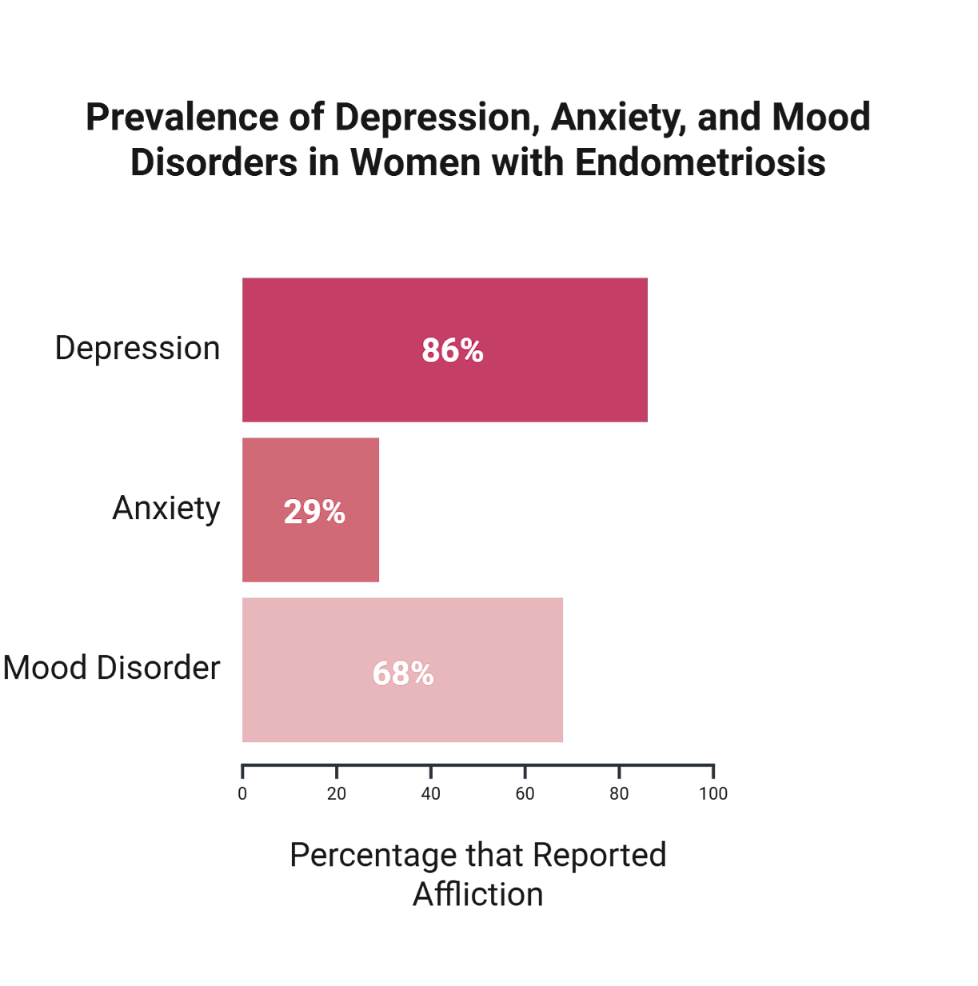
Diagnosed or undiagnosed endometriosis may lead to depression, anxiety, fatigue, and overall poor mental health [2, 3, 6-9]. Out of 104 women with endometriosis, 86% reported suffering from depression, 29% reported suffering from anxiety, and 68% of individuals reported suffering from mood disorders [8]. In addition to altering intimate relationships, researchers agree that these painful symptoms may lead to decreased time with friends, studying, working, and missing social events [2, 3, 7-9]. Hansen et al. believe psychological interventions will not improve physical symptoms, but the quality of life can be improved through acceptance and a variety of therapies [9]. Farshi et al. believe physical pain and mental health effects can be resolved through endometriosis-specific therapy by staying consistently educated while avoiding the side effects of medications [8]. However, this researcher acknowledges depression may not be resolved if there are ongoing fertility issues [8]. Research has shown therapy is successful in improving the quality of life for diverse groups of women such as Chinese women, and women with diabetes [8, 9]. This means individuals with different cultural beliefs and health disparities may achieve help for the side effects that come from endometriosis. Stress, which results from long diagnosis periods, pelvic pain, and infertility, reduces the quality of life [2, 7-9]. Until endometriosis can be cured in an accessible and inexpensive way with minimal side effects, – women with this disorder will continue to suffer from a reduced quality of life.
Conclusion
Women from diverse races, ethnicities, geographic locations, and socioeconomic statuses may experience endometriosis [1-9]. Despite its widespread effects, we do not have a cure for this chronic disease [1-9, 11]. Laparoscopic surgery is currently used to treat and diagnose endometriosis. Researchers need to develop a cure for endometriosis that is accessible and noninvasive for all women. We need to inform doctors and medical practitioners about the common symptoms of endometriosis to limit the number of misdiagnoses and ensure there is no delay in treatment. Researching which treatment option is right for each individual by looking at past research studies and continuing to conduct clinical trials to further our understanding will be extremely beneficial. Understanding the mental health aspects that come along with endometriosis allows individuals to have a maximal quality of life. There is still much to learn and understand about endometriosis. By prioritizing research, raising awareness, and improving access to care, we can take the first steps toward meaningful progress for those affected.

About the Author: Rebecka Halfen
Rebecka Halfen is pursuing a degree in Neurobiology, Physiology, and Behavior, with minors in Global Disease Biology and Professional Writing. She is dedicated to helping others and making a positive impact in her community. When presented with the opportunity to write a literature review on a health disparity, she chose to explore endometriosis– aiming to raise awareness of the challenges women face during their prolonged diagnostic process, which often delays treatment and negatively affects their quality of life. Through her work, she hopes to contribute to the ongoing effort to break the stigma surrounding menstruation and emphasize the need for further research and education.
References
Amini, Leila, Razieh Chekini, Mohammad Reza Nateghi, Hamid Haghani, Tannaz Jamialahmadi, Thozhukat Sathyapalan, and Amirhossein Sahebkar. “The Effect of Combined Vitamin C and Vitamin E Supplementation on Oxidative Stress Markers in Women with Endometriosis: A Randomized, Triple-Blind Placebo-Controlled Clinical Trial.” Pain Research & Management 2021 (May 26, 2021): 5529741. https://doi.org/10.1155/2021/5529741.
Cricco, Chiara, Antonella Daugenti, Domenico Angilecchia, and Daniele Ceron. “Differential Diagnosis of Endometriosis in Patient with Nonspecific Low Back Pain: A Case Report.” Journal of Bodywork and Movement Therapies 27 (July 1, 2021): 227–32. https://doi.org/10.1016/j.jbmt.2021.02.019.
Moustafa, Sarah, Martina Burn, Ramanaiah Mamillapalli, Sepide Nematian, Valerie Flores, and Hugh S. Taylor. “Accurate Diagnosis of Endometriosis Using Serum microRNAs.” American Journal of Obstetrics and Gynecology223, no. 4 (October 2020): 557.e1-557.e11. https://doi.org/10.1016/j.ajog.2020.02.050.
Rodríguez-Tárrega, Elisabet, Ana M. Monzo, Ramiro Quiroga, Patrocinio Polo-Sánchez, Pedro Fernández-Colom, Mercedes Monterde-Estrada, Edurne Novella-Maestre, and Antonio Pellicer. “Effect of GnRH Agonist before IVF on Outcomes in Infertile Endometriosis Patients: A Randomized Controlled Trial.” Reproductive Biomedicine Online41, no. 4 (October 2020): 653–62. https://doi.org/10.1016/j.rbmo.2020.06.020.
Taha, Lina El, Antoine Abu Musa, Dalia Khalifeh, Ali Khalil, Sehrish Abbasi, and Joseph Nassif. “Efficacy of Dienogest vs Combined Oral Contraceptive on Pain Associated with Endometriosis: Randomized Clinical Trial.” European Journal of Obstetrics and Gynecology and Reproductive Biology 267 (December 1, 2021): 205–12. https://doi.org/10.1016/j.ejogrb.2021.10.029.
Li, Pei Shuang, Xue Mei Peng, Xiang Xin Niu, Ling Xu, Ernest Hung Yu Ng, Chi Chiu Wang, Jin Fang Dai, Jun Lu, and Rui Ning Liang. “Efficacy of Acupuncture for Endometriosis-Associated Pain: A Multicenter Randomized Single-Blind Placebo-Controlled Trial.” Fertility and Sterility 119, no. 5 (May 1, 2023): 815–23. https://doi.org/10.1016/j.fertnstert.2023.01.034.
Frankel, Lexi R. “A 10-Year Journey to Diagnosis With Endometriosis: An Autobiographical Case Report.” Cureus 14, no. 1 (n.d.): e21329. https://doi.org/10.7759/cureus.21329.
Farshi, Nooshin, Shirin Hasanpour, Mojgan Mirghafourvand, and Khalil Esmaeilpour. “Effect of Self-Care Counselling on Depression and Anxiety in Women with Endometriosis: A Randomized Controlled Trial.” BMC Psychiatry 20 (July 29, 2020): 391. https://doi.org/10.1186/s12888-020-02795-7.
Hansen, K. E., B. Brandsborg, U. S. Kesmodel, A. Forman, M. Kold, R. Pristed, O. Donchulyesko, D. Hartwell, and L. Vase. “Psychological Interventions Improve Quality of Life despite Persistent Pain in Endometriosis: Results of a 3-Armed Randomized Controlled Trial.” Quality of Life Research 32, no. 6 (2023): 1727–44. https://doi.org/10.1007/s11136-023-03346-9.
“Endometriosis - Symptoms and Causes - Mayo Clinic.” Accessed December 6, 2024. https://www.mayoclinic.org/diseases-conditions/endometriosis/symptoms-causes/syc-20354656.
Poirier, Donald, Atunga Nyachieo, Andrea Romano, Jenny Roy, René Maltais, Daniel Chai, Bert Delvoux, Carla Tomassetti, and Arne Vanhie. “An Irreversible Inhibitor of 17β-Hydroxysteroid Dehydrogenase Type 1 Inhibits Estradiol Synthesis in Human Endometriosis Lesions and Induces Regression of the Non-Human Primate Endometriosis.” The Journal of Steroid Biochemistry and Molecular Biology 222 (September 1, 2022): 106136. https://doi.org/10.1016/j.jsbmb.2022.106136.
Simpson, Khara. “Period Pain: Could It Be Endometriosis?,” June 20, 2024. https://www.hopkinsmedicine.org/health/wellness-and-prevention/period-pain-could-it-be-endometriosis.
Moawad, N. S., B. Arkerson, M. Laguerre, and M. Robinson. “92: Long-Term Outcomes of Laparoscopic Surgery for Endometriosis.” American Journal of Obstetrics & Gynecology 218, no. 2 (February 1, 2018): S949. https://doi.org/10.1016/j.ajog.2017.12.111.