



CAR-T Cell Therapy’s Potential and Limitations as a Treatment for Malignant Brain Tumors
Introduction
Malignant brain tumors are responsible for the deaths of many pediatric, adolescent, and adult populations around the world. It is estimated that 87,053 deaths were attributed to malignant brain tumors between 2017 and 2021, with brain cancer being the most common cause of cancer death amongst pediatric populations [1]. The expansion of cancer research has drawn attention to the mortality rates of brain tumors, yet many patients with brain tumors experience a poor prognosis with a five-year post-diagnosis survival rate of only 35.7%, and brain tumors are often treatment-resistant [1]. Current treatments for brain tumors include chemotherapy, radiotherapy, and invasive surgery, but intensification of these therapies has not improved clinical outcomes, highlighting the need for new innovative therapies for brain tumors. In immunology, the study of the immune system, T-cells are adaptive immune cells that recognize specific antigens (markers) on the surface of infected or cancerous cells. However, normal T-cells, in addition to antigen presentation, require a type of receptor that many cancers downregulate called the major histocompatibility complex (MHC) receptor, making it difficult to develop new therapies because normal T-cells are not able to recognize cancer cells due to a lack of MHC presentation.
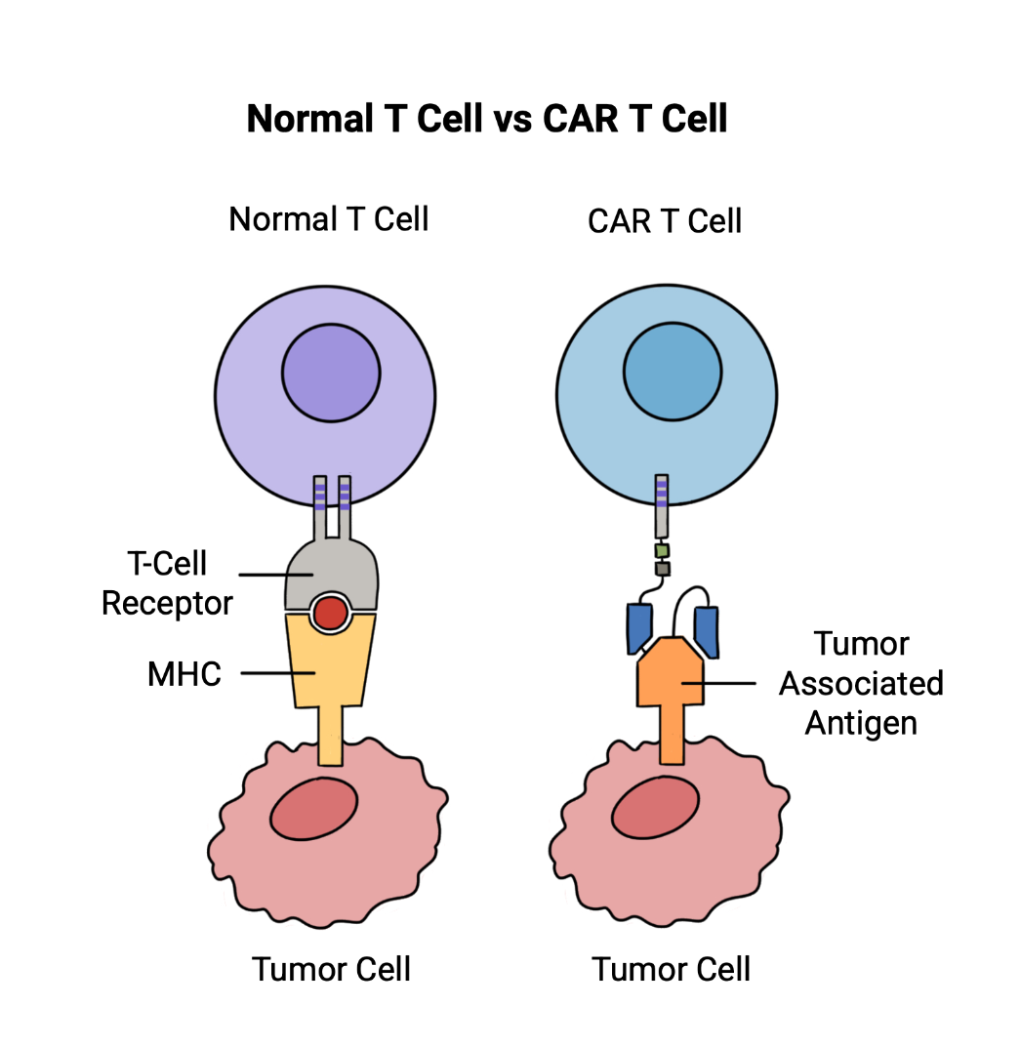
Researchers have recently focused on chimeric antigen receptor T-cell therapy (CAR-T), a branch of immunotherapy dating back to the 1860s, as a potential treatment for malignant brain tumors such as glioblastoma, astrocytoma, and medulloblastoma because it doesn’t require presentation of the MHC receptor to result in tumor killing [2]. In order to develop treatments for these brain tumors, scientists have begun to explore the immunological effects, bioengineering, and clinical applications attributed to CAR-T cell therapy. However, due to the potential adverse effects and limited research, most studies for brain tumor applications are in preclinical stages. Researchers are pushing for the urgent need to begin safe and efficient clinical trials. This review will evaluate the literature on CAR-T cell therapy antigen targets through current clinical trials and/or animal studies, routes of possible administration of CAR-T cells, and the therapy’s limitations as a treatment for malignant brain tumors.
CAR-T Cell Therapy Possible Antigen Targets
CAR-T cells are genetically engineered immune T-cells that alter a patient’s immune system and specifically attack cancerous cells around the brain tumor by targeting a specific antigen that is expressed within that tumor without need for recognition by the MHC receptor [2]. Selecting the best antigen target that is only present on tumor cells and not on normal cells, along with an antigen that limits adverse effects associated with CAR-T cell injection, is a challenge that holds back CAR-T cell clinical trials for brain tumors. However, one possible antigen target that has recently gained much attention is the immune regulatory protein B7 homolog 3 (B7-H3), which has been shown to be highly expressed in many malignant brain tumors. Its role in a brain tumor’s cellular environment called the immunosuppressive tumor microenvironment (TME) makes it a promising target for CAR-T cell therapy because B7-H3 interacts with multiple cell types within the TME including tumor cells [3]. A study conducted in 2020 utilized a B7-H3 antigen, which is highly expressed on the prenatal brain, to administer B7-H3-targeted CAR-T cells in mouse models of atypical teratoid/rhabdoid tumor (ATRT), a pediatric brain tumor caused primarily by loss of a tumor-suppressor gene [4]. The researchers found that administered B7-H3-targeted CAR-T cells are effective in treating aggressive ATRTs due to their increased antitumor activity, lower levels of immune activation, and more rapid therapeutic activity [4]. However, since this study was conducted in vitro, it was necessary to use a clinical trial using B7-H3-targeted CAR-T cells for malignant brain tumors to gain an understanding of the efficacy of these cells in humans. In 2019, researchers developed BrainChild-03, the first in-human phase 1 clinical trial, and administered B7-H3-targeted CAR-T cells in children with recurrent/refractory brain tumors and Diffuse Intrinsic Pontine Glioma (DIPG), an aggressive pediatric brain tumor arising in the brainstem [5]. From the initial cohort of three DIPG patients, with 40 repeated infusions of B7-H3-targeted CAR-T cells, none of the patients were observed to have dose-limiting toxicities, with one patient sustaining clinical improvement through 12 months of study [5]. These two research articles verify the efficacy of B7-H3-targeted CAR-T cells for malignant brain tumors. However, more research and clinical trials are needed, as there were only three patients involved in the clinical trial, which can lead to discrepancies in the clinical trial’s results. Greater research is needed to improve the transport of B7-H3-targeted and other antigen-targeted CAR-T cells to brain TMEs for future treatment. However, the amplitude of possible antigen targets for CAR-T cell therapy makes the therapy a great candidate for the treatment of malignant brain tumors.
Administration of CAR-T Cells
In addition to determining the best antigen target for CAR-T cell therapy, optimizing the route and infusion of CAR-T cell administration is a critical factor when enhancing the therapeutic response in malignant brain tumors. There are many different routes of administration of CAR-T cells, although common strategies for administration include locoregional (intraventricular, intratumoral, intracerebroventricularly, and intrathecal), intravenous (systemic), and intranasal delivery methods [6]. Intravenous delivery, through the veins, is often the most common type of administration of CAR-T cells, but many studies have shown that this type of administration is often the least effective in CAR-T cell therapy for brain tumors. In a study researching B7-H3-targeted CAR-T cells in ATRT models of mice, researchers compared the difference in locoregional administration (injection limited to the brain tumor area) to intravenous administration, while at the same CAR-T cell dose. The researchers found that locoregional administration led to a highly significant survival rate compared to intravenous administration, which did not cure any of the mice [4]. They also showed that intravenous administration expressed higher levels of systemic inflammatory cytokines compared to locoregional administration [4]. This suggests that intravenous administration doesn’t support the transport of CAR-T cells to the tumor site. Compared to intravenous administration, locoregional administration has recently shown great success due to its ability to bypass circulation in the brain and target the tumor more effectively [6]. For example, in a study conducted in 2023, researchers surgically implanted a small tube into the brains of mice (locoregional) to deliver and study the effects of GPC2-targeted CAR-T cell treatments on medulloblastoma and diffuse midline glioma models in mice [7]. Similar to B7-H3, Glypican-2 (GPC2) is a tumor-associated antigen that can be exploited for CAR-T cell therapy, however, GPC2 is mostly expressed in pediatric brain tumors, whereas B7-H3 is overexpressed across many brain tumors. Researchers found that, following treatment, there was a significant tumor repression in the medulloblastoma model and a significant prolonged survival rate in the diffuse midline glioma model [7]. This article shows that locoregional administration, compared to other routes of administration, can be most effective in preclinical models for malignant brain tumors such as medulloblastoma. However, the best administration for a single malignant brain tumor patient is dependent on multiple factors, including invasiveness of the administration, dose of the CAR-T cells, and potential effects associated with that type of administration.

Limitations and Solutions for the Efficacy of CAR-T Cells

Once CAR-T cells are delivered into the body, there are many barriers that hold back the efficacy and transport of CAR-T cells to the brain TME. One limitation that can affect the efficacy and transport of CAR-T cells to the brain is the blood-brain barrier (BBB) [8]. The BBB interfaces between blood vessels and neural tissue by creating a tightly regulated unit that includes blood vessels, brain cells, and immune cells [9]. The BBB only allows specific substances and immune cell subsets required for immune surveillance to reach the brain, and thus can block CAR-T cells from reaching the tumor [8]. In order to bypass this limitation, much research has looked into low-intensity pulsed ultrasound (LIPU) to temporarily open the BBB for improved CAR-T cell transport to the tumor. LIPU is typically administered to mice by directing an external 1 MHz ultrasound transducer frequency wave over the shaved head (aligned with the tumor site) while intravenously injecting microbubbles to amplify the mechanical effects of the ultrasound and transiently disrupt the BBB [10]. LIPU-induced BBB opening is favorable for brain tumors due to its non-invasive nature, its ability to be reversible, with the effects typically lasting only a few hours [10]. A study conducted in 2021 analyzed the effects that LIPU has on the BBB’s response to immune therapeutics [10]. They intravenously administered specific tumor-associated antigen (EGFRvIII)-targeted CAR-T cells and compared their delivery and persistence in glioblastoma mice models, with and without using LIPU. CAR-T cells without LIPU were distributed to the liver and lungs, with few going through the brain region; while CAR-T cells with LIPU were seen to have increased distribution to the brain significantly between 24 to 72 hours after treatment. They also found that mice treated with EGFRvIII-targeted CAR-T cells alongside LIPU had a median survival of > 80 days compared to mice treated with CAR-T cells alone of 35 days. This study shows that combining different therapies, such as LIPU, could show meaningful results to improve CAR-T cell transport and therapeutic benefit. However, even if CAR-T cells are efficiently transported to the tumor, the TME is still immunosuppressive, which can limit the long-term benefit and efficacy of the therapy by rendering CAR-T cells dysfunctional to attack the tumor site [8]. To improve this immune response in brain tumors, researchers have combined CAR-T cells with bioengineered immune inhibitory molecules such as transforming growth factor-beta (TGF-β) to facilitate remodeling of the TME [11]. Under physiological conditions, TGF-β acts as a signaling molecule (cytokine) that reduces immune activation and prevents excessive inflammation of the brain tumor microenvironment. However, in a study conducted in 2024, researchers bioengineered a bispecific CAR-T cell that targets both a specific antigen (IL-13Rɑ2) and an altered version of TGF-β that transforms TGF-β from an immunosuppressant to an immunostimulant molecule to allow tumor cell killing. They assessed its efficacy in immune interactions within patient-derived glioblastoma xenograft mouse models [11]. They found that the bispecific CAR-T cells reduced the presence of immunosuppressive brain immune cells in mouse models while enhancing CAR-T cell infiltration into brain tumor tissue [11]. They also found that animals that were treated with the bispecific CAR-T cells improved median survival to > 150 days after tumor injection compared to mice treated without bispecific CAR-T cells, who survived only 60 days post-injection [11]. This data suggests that bispecific CAR-T cells can improve the efficacy and immune response typically associated with CAR-T cell injection. Although these articles deploy different methods to improve the response of CAR-T cells for brain tumors, they both highlight the interest in improving the efficacy and transport of CAR-T cells through combining different therapies and not relying on CAR-T cells alone for better treatment outcomes.
Conclusion
CAR-T cell therapy’s minimal invasiveness and versatility make it an ideal treatment candidate for malignant brain tumors. However, the therapy is severely limited in selecting the best antigen target, best administrative routes, and has limited efficacy and transport to the tumor site. The complexity of the BBB and the tumor microenvironment’s associated neurotoxicity limits CAR-T cell therapy from being used in clinical trials involving brain tumors. Solutions to these limitations include using B7-H3-targeted therapies, using locoregionally administered infusion, low-intensity pulsed ultrasound, and bispecific TGF-ꞵ-based CAR-T cells. B7-H3-targeted CAR-T cells allow broader tumor-cell killing because B7-H3 is highly expressed across many malignant brain tumors. Locoregionally administered infusion of CAR-T cells increases CAR-T cells concentration at the tumor site and is infused directly into the brain which facilitates more rapid therapeutic activity by not having to have traveled through the bloodstream. Low-intensity pulsed ultrasound can temporarily bypass the limitations of the BBB, hence increasing transport, while inclusion of bioengineered versions of TGF-ꞵ in TGF-ꞵ-based CAR-T cells can improve the immune response of CAR-T cell injection. To ensure the success of these solutions, CAR-T cells should continue to be tested in clinical trials to evaluate the safety, effectiveness, and throughput of these solutions in human participants after animal preclinical studies have been conducted. A combination of all of these solutions will make CAR-T cell therapy a more reliable and effective therapy for malignant brain tumors in the future.
About the Author: Elias Guzman
Elias Guzman is a first year masters student in the Biomedical Engineering graduate group. He loves playing latin pop music, guitar, and piano, along with taking independent voice lessons to improve his vocal repertoire. He chose his program because of his passion to understand, engineer, and implement medical innovations into clinical translation. His specific interest is in understanding brain cancer pathogenesis and to develop therapeutics that fight this terrifying cancer. He is currently in the Paszek Lab here at UC Davis where he is investigating the impact of the interference of glycosylation pathways within extracellular vesicles to develop cancer therapies. He originally wrote this review as a final assignment in the UWP 104FV (Writing in the Health Professions) course. He chose to write on this subject because malignant brain tumors, in particular, are very deadly and one of the common types of brain cancers. He wanted to understand different therapies to treat these cancers to develop better treatment options for patients. From this review, he hopes to raise awareness of CAR-T cell therapy and have readers understand the varying benefits and limitations so that patients, researchers, and healthcare professionals can make better informed decisions of treatment. He aspires to become a Clinical Engineer in the biotechnology industry that helps to develop and validate medical products to be used by patients and healthcare providers one day!
Author’s Note
This literature review was written for a culminating assignment in Amy Goodman-Bide’s UWP 104FV (Writing in the Health Professions) course. I chose to write about this specific topic because malignant brain tumors are one of the deadliest and most common types of brain cancer amongst many populations, and understanding different therapies to treat these cancers is essential for better treatment outcomes. I also have family and myself that suffers from stable brain tumors, so learning about different ways to treat these tumors have been rewarding both academically and personally. CAR-T cell therapy has recently emerged as a potential treatment modality to treat brain and central nervous system cancers. This review highlights the potential and limitations of CAR-T cell therapy as a treatment for malignant brain tumors and is intended for fellow students, researchers, and healthcare professionals. Understanding these potentials and limitations will allow brain tumor patients and families to live healthier and happier lives. I want readers to learn about different treatments for brain cancer and be excited that an immunological treatment such as CAR-T Cell Therapy exists for brain tumors.
References
Price, M., Ballard, C., Benedetti J., Neff, C., Cioffi, G., Waite, A. K., Kruchko, C., Barnholtz-Sloan, S. J., Ostrom, T. Q. 2024. CBTRUS Statistical Report: Primary Brain and Other Central Nervous System Tumors Diagnosed in the United States in 2017–2021. Neuro Oncol. 26(6):1-85. https://doi.org/10.1093/neuonc/noae145
- Gaoual, Y., Mahyaoui, A., Yachi, L., Bouatia, M., Aliat, Z., & Rahali, Y. 2025. Advancements and challenges in CAR T cell therapy for pediatric brain tumors: A review. J Oncol Pharm Pract. 31(7):1150-1158. https://doi.org/10.1177/10781552251331609
- Talbot, L. J., Chabot, A., Ross, A. B., Beckett, A., Nguyen, P., Fleming, A., Chockley, P. J., Shepphard, H., Wang, J., Gottschalk, S., & DeRenzo, C. 2024. Redirecting B7-H3 CAR T Cells to Chemokines Expressed in Osteosarcoma Enhances Homing and Antitumor Activity in Preclinical Models. Clin Cancer Res. 30(19):4434–4449. https://doi.org/10.1158/1078-0432.CCR-23-3298
- Theruvath, J., Sotillo, E., Mount, C. W., Graef, C. M., Delaidelli, A., Heitzeneder, S., Labanieh, L., Dhingra, S., Leruste, A., Majzner, R. G., Xu, P., Mueller, S., Yecies, D. W., Finetti, M. A., Williamson, D., Johann, P. D., Kool, M., Pfister, S., Hasselblatt, M., Frühwald, M. C., … Mackall, C. L. 2020. Locoregionally administered B7-H3-targeted CAR T cells for treatment of atypical teratoid/rhabdoid tumors. Nat Med. 26(5):712–719. https://doi.org/10.1038/s41591-020-0821-8
- Vitanza, N. A., Wilson, A. L., Huang, W., Seidel, K., Brown, C., Gustafson, J. A., Yokoyama, J. K., Johnson, A. J., Baxter, B. A., Koning, R. W., Reid, A. N., Meechan, M., Biery, M. C., Myers, C., Rawlings-Rhea, S. D., Albert, C. M., Browd, S. R., Hauptman, J. S., Lee, A., Ojemann, J. G., … Park, J. R. 2023. Intraventricular B7-H3 CAR T Cells for Diffuse Intrinsic Pontine Glioma: Preliminary First-in-Human Bioactivity and Safety. Cancer Discov. 13(1):114–131. https://doi.org/10.1158/2159-8290.CD-22-0750
- Yaacoub, S., Vannoy, E., Maslova, S., Haffey, A., Khorsandi, K., Sheybani, N., & Haydar, D. 2025. CAR-T cell therapy in brain malignancies: obstacles in the face of cellular trafficking and persistence. Front Immunol. 16:1596499. https://doi.org/10.3389/fimmu.2025.1596499
- Harvey, K., Madsen, P. J., Smith, T., Griffin, C., Patterson, L., Vitanza, N. A., Storm, P. B., Resnick, A. C., & Foster, J. B. 2023. Intracranial Cannula Implantation for Serial Locoregional Chimeric Antigen Receptor (CAR) T Cell Infusions in Mice. J Vis Exp. 192(e64886). https://doi.org/10.3791/64886
- Huang, J., Li, Y. B., Charlebois, C., Nguyen, T., Liu, Z., Bloemberg, D., Zafer, A., Baumann, E., Sodja, C., Leclerc, S., Fewell, G., Liu, Q., Prabhakarpandian, B., McComb, S., Stanimirovic, D. B., & Jezierski, A. 2022. Application of blood brain barrier models in pre-clinical assessment of glioblastoma-targeting CAR-T based immunotherapies. Fluids Barriers CNS. 19(1):38. https://doi.org/10.1186/s12987-022-00342-y
- Alahmari A. 2021. Blood-Brain Barrier Overview: Structural and Functional Correlation. Neural plasticity. 2021(1):6564585. https://doi.org/10.1155/2021/6564585
- Sabbagh, A., Beccaria, K., Ling, X., Marisetty, A., Ott, M., Caruso, H., Barton, E., Kong, L. Y., Fang, D., Latha, K., Zhang, D. Y., Wei, J., DeGroot, J., Curran, M. A., Rao, G., Hu, J., Desseaux, C., Bouchoux, G., Canney, M., Carpentier, A., … Heimberger, A. B. 2021. Opening of the Blood-Brain Barrier Using Low-Intensity Pulsed Ultrasound Enhances Responses to Immunotherapy in Preclinical Glioma Models. Clin Cancer Res. 27(15):4325–4337. https://doi.org/10.1158/1078-0432.CCR-20-3760
- Hou, A. J., Shih, R. M., Uy, B. R., Shafer, A., Chang, Z. L., Comin-Anduix, B., Guemes, M., Galic, Z., Phyu, S., Okada, H., Grausam, K. B., Breunig, J. J., Brown, C. E., Nathanson, D. A., Prins, R. M., & Chen, Y. Y. 2024. IL-13Rα2/TGF-β bispecific CAR-T cells counter TGF-β-mediated immune suppression and potentiate anti-tumor responses in glioblastoma. Neuro Oncol. 26(10):1850–1866. https://doi.org/10.1093/neuonc/noae126