



Insulin Resistance in Polycystic Ovary Syndrome and its Impact on Women’s Fertility
Introduction
Polycystic Ovary Syndrome (PCOS) is a chronic hormonal and metabolic disorder that affects 15% of reproductive-aged women globally [1]. In the recent decade, there has been on average a 10% increase in the proportion of women around the world diagnosed with polycystic ovary syndrome [2]. Women with PCOS experience a cascade of sexual hormone imbalances, menstrual abnormalities, and fertility complications [3]. These conditions are most commonly due to insulin resistance and excess androgen production, or hyperandrogenism. More than 70% of women with PCOS experience insulin resistance, impairing their ability to adequately regulate androgen production [4]. Specifically, insulin resistance leads to androgen overproduction in the ovaries, decreasing the likelihood of successful in vitro fertilization or natural conception [5]. Prolonged exposure to excess androgen in the ovaries can also increase the risk of ovarian cancers and compromise healthy embryo development [6]. While PCOS is now increasingly recognized as a leading cause of infertility, there is still no definitive cure [7]. Currently, medical professionals manage PCOS symptoms with birth control, metabolic surgeries, hormone blockers and supplements [7]. They are also developing efforts to track androgen production pathways, target the specific genes responsible for insulin resistance [8] and experiment with regenerative mesenchymal stem cell extracellular vesicles to repair unresponsive insulin receptors in ovarian cells [9]. Current research mainly highlights insulin’s metabolic and hormonal dysregulation in women with PCOS. However, there is overwhelming evidence that PCOS and its corresponding insulin resistance diagnosis are significant threats to women’s reproductive health and fertility. In this review, I discuss the mechanisms of insulin resistance in women with PCOS, the associated infertility diagnosis, and current developing treatments for insulin resistance-based infertility.
Excess insulin levels in the ovaries is linked to increased androgen production and disrupted regulation of normal ovarian function. Insulin binds receptors on ovarian theca cells, endocrine cells surrounding ovarian follicular cells, to stimulate the androgen synthesis required for estrogen production [10]. An ovarian theca cell culture from PCOS patients revealed that PCOS-related insulin resistance is tissue-specific for the metabolic pathway [3]. In women with PCOS, insulin is not properly metabolized and accumulates in the body. This excess insulin triggers theca cells to produce more androgens, worsening PCOS symptoms [3]. Wang et al. (2021) concluded that women with insulin resistance that did not have PCOS experienced similar sex hormone abnormalities, leading to unsuccessful IVF treatments [5]. They found that insulin resistance significantly increased testosterone levels, directly interfering with viable egg production and embryo development in their patients [5]. Both studies deduced that insulin resistance obstructs the androgen pathway with or without the PCOS characteristics that contribute to sex hormone disruption. However, PCOS tissue-specific insulin resistance suppresses the liver’s ability to uptake more free testosterone, thereby promoting hyperandrogenism [3]. The sources describe a mechanism of insulin resistance that leads to a cascade of hormone imbalances, but specify that PCOS-related IR has a distinct impact on the endocrine system.
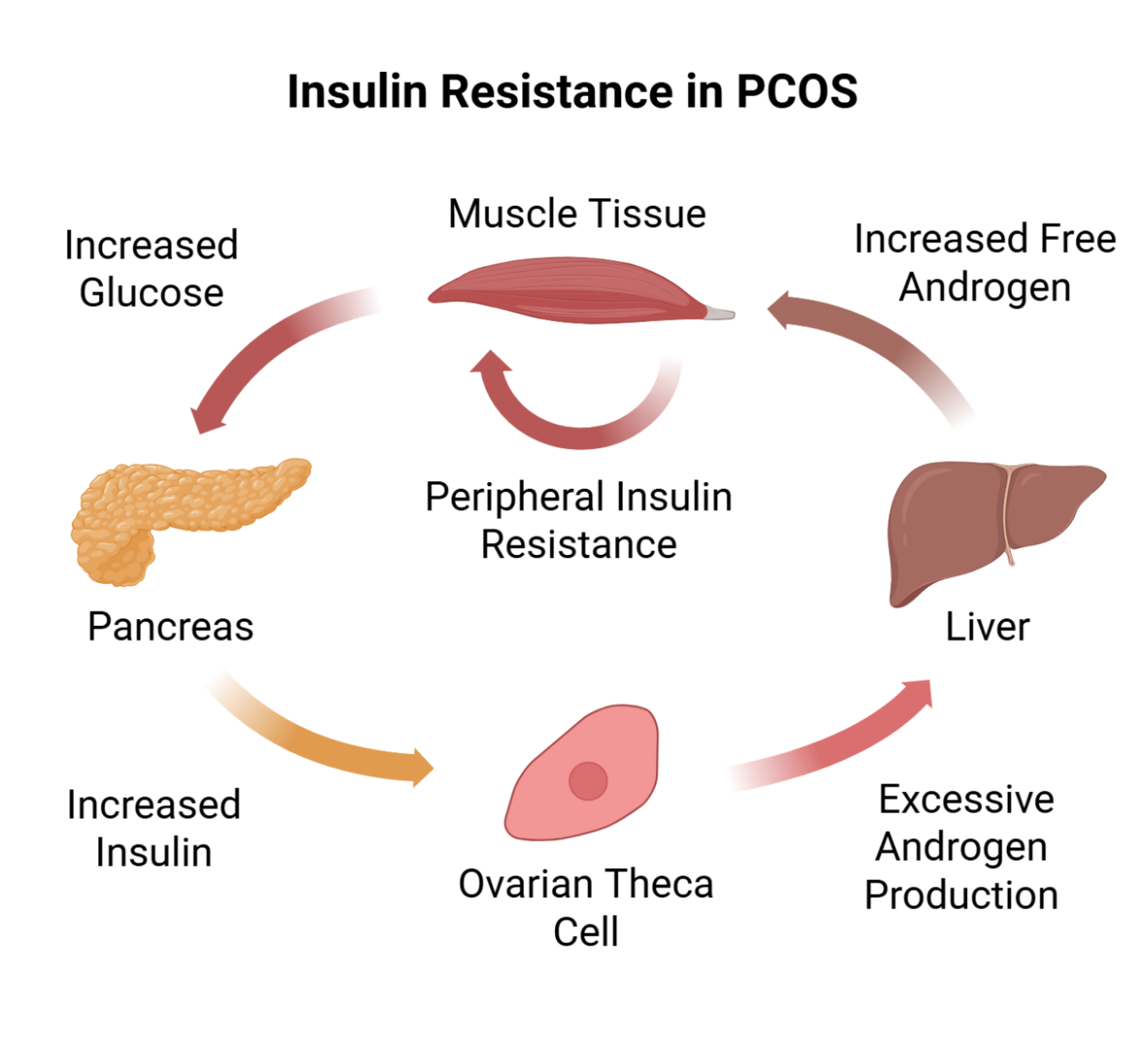
In women with PCOS, cells fail to properly produce the proteins and hormones necessary for insulin uptake, amplifying adverse hormone responses. Women with PCOS are commonly deficient in the gene associated with retinoid-interferon-induced mortality 19 (GRIM19) [1]. GRIM19 regulates cell growth, immune responses, and insulin metabolism. Researchers found that GRIM19-deficient individuals lacked the enzymes necessary for insulin uptake, leading to elevated androgen levels in their body [1]. To further illustrate PCOS-induced hormone imbalances, Altınkılıç et al. (2023) recorded the activity of specific enzymes and their thirty-three steroid hormone metabolites in individuals with PCOS [11]. The catalytic activity of many enzymes were insignificantly different, but they found that all enzymatic activity specifically involved in drug metabolism and biosynthesis of androgen were higher in the PCOS group. Specifically, they noted that the C11-oxy backdoor pathway, a metabolic pathway responsible for androgen synthesis, was more active in the PCOS group and was linked to disrupting insulin signaling [11]. Both studies highlight metabolic disruptions in women with PCOS, specifically insulin resistance, that contributes to elevated androgen production. Their findings suggest that PCOS patients experience insufficient enzymatic regulation of insulin and hormone biosynthesis, leading to an abnormal production of androgens.
Fertility complications arising from insulin-hormone disruptions
PCOS-induced ovulation and other menstrual disorders are recognized as the main causes for infertility in reproductive-aged women [7]. Hussein and Karami (2023) found that PCOS patients with elevated levels of insulin resistance and testosterone had more infrequent menstrual cycles with longer gaps between cycles [4]. The strong correlation between the severity of insulin resistance and menstrual cycle length indicates that insulin accumulation may also induce excess estrogen production. This oversaturation of sex hormones in the ovaries can directly hinder ovarian function and fetal development [4]. Wang et. al (2021) found that women with insulin resistance had significantly lower percentages of mature oocytes, or fully developed eggs, and viable blastocysts, or early-stage embryos, compared to those without insulin resistance [5]. Further, researchers recognized a positive correlation between elevated insulin and androgen levels contributing to a decrease in successful embryo development. Both studies found that with increasing severity of insulin resistance and the resulting hormone disruptions, there were more structural and functional abnormalities in ovaries. Overall, women with PCOS face an increasingly clear risk of infertility due to delayed menstrual cycles, reduced mature oocytes, and more impediments to healthy embryo development starting in the ovaries.

Women with PCOS experienced fertility complications that were proportionally correlated to the severity of their free androgen levels and insulin sensitivity [6]. Researchers discovered that PCOS patients experienced abnormal ovarian angiogenesis and had smaller, thinner, and less dense placentas. Such abnormalities in the placenta could explain lower birth rates, more premature births, and disproportionate miscarriage rates in patients with PCOS [6]. This study on placenta morphology illustrates that sex hormone disruptions in ovarian cells significantly impedes proper fetal development. Furthermore, Hochberg et al. (2023) found that women with PCOS pregnant from in-vitro fertilization had higher rates of placenta inflammation and pregnancy complications [12]. They found that women with PCOS experienced more high risk births and lower birth rates compared to unaffected women pregnant from IVF [12]. Regardless of natural conception or IVF, both studies reveal a positive correlation between androgen metabolite concentration and placental malformations in pregnant women with PCOS. They also reveal how excess hormone levels can disrupt proper ovarian development and cell regeneration, leading to increased difficulties in embryo implantation. If they overcome the hurdles in conceiving, PCOS women still have a high chance of developing weak placentas that cannot fully support their child’s development [6]. Therefore, future studies should address insulin resistance in PCOS patients as a possible treatment to combat fertility complications, such as weaker ovarian and placental physiology.
Developing treatment for insulin resistance in PCOS–related infertility
Researchers are innovating new ways to target specific genes responsible for insulin resistance and reversing PCOS symptoms. Park et al. (2020) found that injecting PCOS mice with mesenchymal stem cells extracellular vesicles (MSC-EV) from human umbilical cord tissue resulted in significantly lower gene expression in the target adrenal gland cells and positive fertility outcomes [9]. MSC-EVs regenerated insulin receptors on ovarian theca cells to increase insulin uptake, leading to decreased androgen production. Based on the positive results of this study, researchers should look into developing a specific MSC-EV-based therapy as a viable option for adrenal gland regeneration and sex hormone stabilization. Using genetic databases, researchers have identified and flagged genes that specifically encode for proteins that exacerbate insulin-resistance mechanisms. Such research provides a foundation for developing therapies that regulate and modify those genes [8]. In particular, GRIM19 can be an effective target gene because GRIM19 deficiencies in women with PCOS obstruct enzymatic activity and indirectly activates genes that promote androgen production [1]. Since researchers have successfully identified genes that are responsible for PCOS symptoms, they could create treatments that regulate gene expression. In particular, researchers could develop ways to reintroduce GRIM19 into a genome or increase its expression in women with PCOS to reorganize metabolic pathways and revitalize their reproductive health. Currently, there are lifestyle adjustments, metabolic surgeries, and medications that manage PCOS symptoms, but no cure. Gene-targeting treatment plans are evolving to mediate insulin resistance and sex hormone pathways, but require further development for specificity and safety in human patients. In identifying the genes related to insulin resistance in PCOS, researchers are taking steps towards treating a condition that directly threatens women’s health and fertility.
Conclusion
The purpose of this review was to evaluate the role of insulin resistance in PCOS and its adverse consequences on women’s reproductive health. Several recent studies reveal how disruptions in metabolic pathways, such as insulin resistance, are directly linked to hormonal abnormalities that drive insufficient ovarian physiology and fetal development. Further research should pinpoint the exact factors that disrupt metabolic pathways and build treatments upon eliminating those factors to regulate the pathways affected in PCOS patients. Currently, the cause for PCOS is still unknown. However, it is clear that an excess androgen production results in abnormalities in ovarian morphology and destructive effects on fertility outcomes. Future studies could further develop stem cell regeneration treatments and genetic modeling software to target specific genes and regulate their expression in PCOS patients. Many recent studies extensively describe PCOS symptoms and specific deficiencies in their biosynthetic pathways. Additional research must be conducted to craft specificity-based treatments that counter the extensive strain that PCOS puts on women’s hormonal, metabolic, and reproductive health.

About the Author: Alexandra Annisse Petro
Alexandra Petro is a third year Cell Biology major. She chose her major because of her passion for understanding the fundamental cellular processes that define all life and disease. Her specific interests in developmental biology and women’s health led her to writing her literature review on mechanisms of PCOS and its impact on fertility outcomes. She hopes to raise awareness of PCOS and have readers understand the far-reaching effects of the condition in the body. Professionally, Alexandra aspires to work in a genetics research laboratory and potentially attend graduate school for genetic counseling. She recently accepted an undergraduate intern position at a crop genomics testing laboratory.
Author’s Note
For my Fall UWP 102 class, we were required to write a literature review on a relevant topic for an audience of classmates and academics in the biological sciences field. I chose to write about PCOS and its implications on women’s fertility because I have many friends who have PCOS. I watched my friends deal with their symptoms and express their own concerns for their fertility in the future, so I wanted to learn more. I was further motivated because I have always been interested in the biological processes behind women’s reproductive health and fetal development. I knew that I wanted to synthesize research surrounding women’s hormonal and reproductive health. From my review, I want readers to understand what PCOS is and the varied symptoms it can produce in those with the condition. It is a very common condition that is not well understood by the public, so I would like readers to be informed and possibly be inspired to conduct their own research for treatment plans in the future.
References
- aggravates metabolic disorder and ovarian dysfunction in PCOS. Biochimica et Biophysica Acta (BBA) - Molecular Basis of Disease [Internet]. 1870(4):167063–167063. doi:https://doi.org/10.1016/j.bbadis.2024.167063.
- Deswal R, Narwal V, Dang A, Pundir CS. 2020. The Prevalence of Polycystic Ovary Syndrome: A Brief Systematic Review. Journal of Human Reproductive Sciences [Internet]. 13(4):261–271. doi: 10.4103/jhrs.JHRS_95_18.
- Vatier C, Christin-Maitre S, Vigouroux C. 2022. Role of insulin resistance on fertility – Focus on polycystic ovary syndrome. Annales d’Endocrinologie [Internet]. 83(3):199–202. doi:https://doi.org/10.1016/j.ando.2022.04.004.
- Hussein K, Karami M. 2023. Association between insulin resistance and abnormal menstrual cycle in Saudi females with polycystic ovary syndrome. Saudi Pharmaceutical Journal [Internet]. 31(6): 1104-1108. doi: https://doi.org/10.1016/j.jsps.2023.03.021.
- Wang H, Zhang Y, Fang X, Kwak-Kim J, Wu L. 2021. Insulin Resistance Adversely Affect IVF Outcomes in Lean Women Without PCOS. Frontiers in Endocrinology [Internet]. 12. doi:https://doi.org/10.3389/fendo.2021.734638.
- Sahin E, Sahin ME, Mehmet Mete Kirlangic, Serhan Kutuk, Cam SD, Ozdemir HC, Emre Genc. 2024. Effects of Different PCOS Phenotypes on Placental Three-Dimensional Power Doppler Indices and Placental Volume during the First Trimester. Placenta [Internet]. 154:176–183. doi: https://doi.org/10.1016/j.placenta.2024.07.002.
- Shan Y, Han X, Yang C, Li W, Zhou G, Han J, Bao Y, Yu H, Tu Y. 2023 Sep 27. The impact of metabolic surgery on natural conception rates in women with infertility, obesity and polycystic ovary syndrome: a retrospective study. Surgery for Obesity and Related Diseases: Official Journal of the American Society for Bariatric Surgery [Internet]. S1550-7289(23)007128. doi:https://doi.org/10.1016/j.soard.2023.09.024.
- Tim B, Kouznetsova VL, Santosh Kesari, Tsigelny IF. 2023. Targeting of insulin receptor endocytosis as a treatment to insulin resistance. Journal of Diabetes and its Complications [Internet]. 37(11):108615–108615. doi:https://doi.org/10.1016/j.jdiacomp.2023.108615.
- Park H-S, Cetin E, Hiba Siblini, Ayman Al-Hendy. 2021. INFERTILITY TREATMENT USING HUMAN MESENCHYMAL STEM CELL DERIVED EXTRACELLULAR VESICLE IN LETROZOLE INDUCED PCOS MOUSE MODEL. Fertility and Sterility [Internet]. 116(3):e120–e120. doi: 10.1016/j.fertnstert.2021.07.336.
- Richards JS. 2018. Theca Cells. Encyclopedia of Reproduction. 2:14-20. doi: https://doi.org/10.1016/B978-0-12-801238-3.64624-X.
- Emre Murat Altınkılıç, Therina du Toit, Sakin Ö, Attar R, Groessl M, Flück CE. 2023. The serum steroid signature of PCOS hints at the involvement of novel pathways for excess androgen biosynthesis. The Journal of Steroid Biochemistry and Molecular Biology. 233:106366–106366. doi: https://doi.org/10.1016/j.jsbmb.2023.106366.
- Hochberg A, Mills G, Volodarsky-Perel A, Nhung T, Alexandre Machado-Gedeon, Cui Y, Shaul J, Dahan MH. 2023. The impact of polycystic ovary syndrome on placental histopathology patterns in in-vitro fertilization singleton live births. Placenta [Internet]. 139:12–18. doi:10.1016/j.placenta.2023.05.015.
- Freeman AM, Acevedo L, Pennings N. 2023. Insulin Resistance. StatPearls [Internet]. Available from: https://www.ncbi.nlm.nih.gov/books/NBK507839/.